600+ Patients Seen at Koforidua School for the Deaf
Audiologists, hearing aids, vision checks, and ear care — how our 2007 mission brought specialized care to students at Koforidua School for the Deaf.
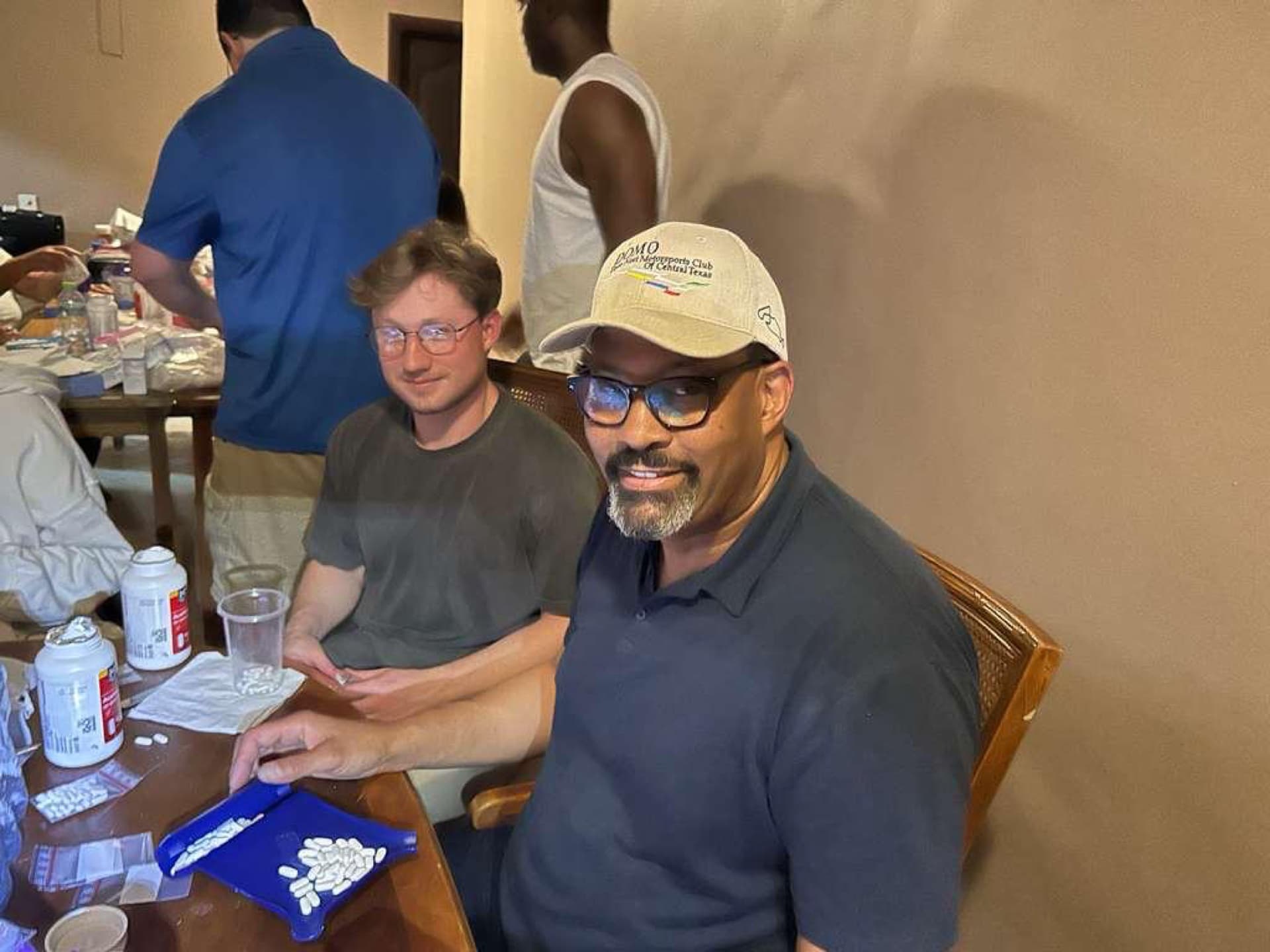
Anidaso Health has given service in several locations across Ghana — Kwahu Government Hospital, orphanages in To-No-Mi and Bless the Children, and Koforidua School for the Deaf. Each setting demands different skills. At the school, what patients needed most was not surgery but hearing — and the specialized care that audiologists alone could provide.
2007: two trips, one container, many specialties
We made two trips to Ghana in 2007, in March and April, each lasting two weeks. We also sent a forty-foot container of medical supplies and equipment — a logistical undertaking that took months of sorting, packing, and coordination on both sides of the Atlantic.
The first group consisted of twenty medical personnel: doctors, nurses, a pharmacist, an occupational therapist, and audiologists. The audiologists were a welcome addition — a discipline we had not always been able to bring. They saw over six hundred patients and gave away more than one hundred fifty hearing aids, plus batteries for a full year. For students and adults who had never worn an aid, or whose old devices had failed, that gift was transformative.
The second, smaller group included three doctors — a med/peds physician and an OB/GYN among them — plus a nurse and a biologist. Hysterectomies and c-sections were performed. Outpatient work continued. Clinical lab work advanced. Much time was spent sorting and prioritizing the equipment sent in the container, ensuring that what arrived in Ghana reached the wards and clinics where it was needed most.
A day at Koforidua School for the Deaf
Our work at the school included ear cleaning, vision checks, hearing aid fittings, and general clinical assessment. Students lined up patiently — some nervous, many curious. Audiologists tested hearing, fitted devices, and taught students and staff how to care for them. A year of batteries meant that a fitted aid would still work months later, not fail silently when volunteers had gone home.
Vision checks mattered equally. Hearing loss and visual impairment often coexist; a child struggling in class may be coping with both. Physicians and support staff worked as a team so that no student left with only half their needs addressed.
Education beyond the clinic
We help support some of the orphans we meet through their secondary education — a commitment that extends beyond a single clinic day. At Koforidua and elsewhere, education is part of our mission because health and learning are inseparable. A child who cannot hear the teacher cannot follow the lesson. A fitted hearing aid is, in the most literal sense, a key to the classroom.
Our trips were facilitated by Salormey Volunteers Group with the able assistance of Fred Frempong and Rebeca Lago — the same partners who coordinate our hospital work, our village outreach, and our radio announcements. Without SVG, we would not know which schools to visit, which students to prioritize, or how to earn the trust of administrators and parents.
Gratitude and continuity
Thanks to Anne Halfman, RN, and her friend Sarah, RN, for working with the 2006 container during their extended mission at Kwahu Government Hospital — work that made the 2007 container easier to deploy when our team arrived.
The 2007 audiology work at Koforidua School for the Deaf remains one of the clearest examples of what Anidaso Health can do when the right specialists join the mission: not only treat illness, but restore connection — to sound, to speech, to the world that hearing opens up.