Medical Outreach Across Eight Villages
Radio announcements, village-by-village clinics, diabetes screening, wound care, and mobility aids — how our teams reached communities far from the district hospital.
Not every patient can travel to Kwahu Government Hospital. For many people in rural Eastern Ghana, the nearest modern clinic may be hours away on foot or by shared taxi — if a clinic exists at all. That is why village outreach has been central to every Anidaso Health mission, and why our team spends significant time away from the operating theatre, working directly in the communities we serve.
Building awareness before we arrived
Prior to our visit, Salormey Volunteers Group conducted interviews and made announcements on several local radio stations. This was deliberate: without awareness, even a well-staffed mobile clinic can sit empty. SVG's work ensured that families across the district knew when and where our team would be, what services were available, and that care would be offered without charge.
That outreach — in Twi, on airwaves people actually listen to — is one reason our village clinics see strong attendance. Trust is built locally, long before American volunteers step off the bus.
Eight villages, one medical team
The medical team conducted treatment outreach in eight villages: Oboyan, Bukuruwa, Mangoase, Kwaku Safo, Hweehwee, and others across the district. Each stop was organized with SVG's help, who know the roads, the chiefs, and the families who need care most.
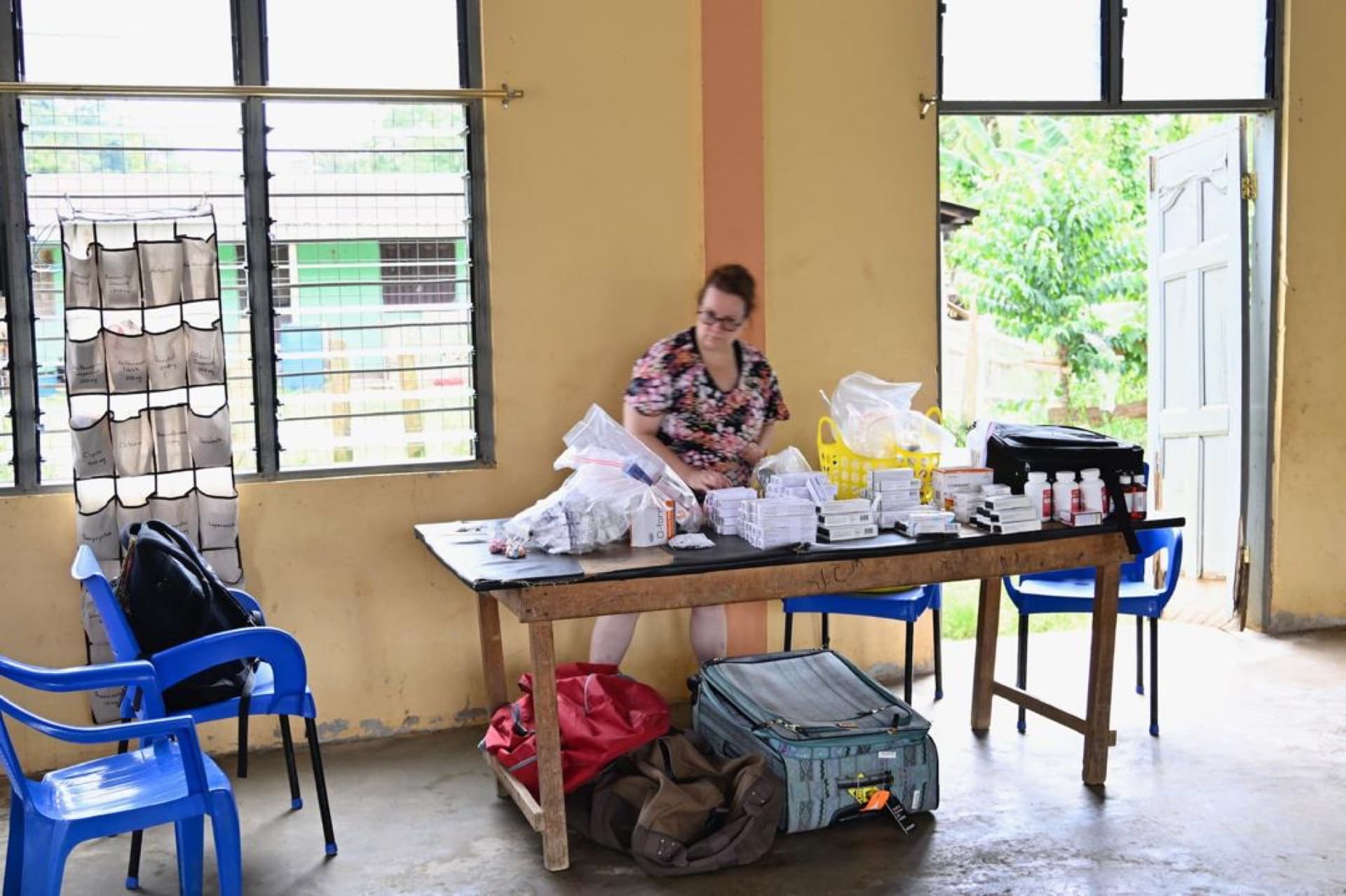
At every site, clinicians addressed a wide variety of illnesses — infections, chronic pain, untreated injuries, and conditions that had been managed for years with traditional medicine alone. Adults received diabetes and hypertensive screening; many had never had their blood pressure or blood sugar checked. Children received prophylactic treatments aimed at preventing illness before it took hold.
Wounds, mobility, and daily dignity
Wounds and skin infections were common presentations. Nurses cleaned and dressed injuries that might otherwise have led to sepsis or permanent disability. Where mobility was limited, our physical therapist assessed each patient and distributed walkers, crutches, and wheelchairs when needed — simple devices that restore independence for elders and accident survivors alike.
Health care in rural Ghana is not only about diagnosis. It is about whether a grandmother can walk to market, whether a father can return to farming, whether a child can get to school. Mobility aids are among the most tangible gifts we bring.
Clothes, shoes, and community gifts
Medical care was only part of the visit. The team also donated clothes, shoes, and other material goods to the communities we visited — items collected and purchased by volunteers and supporters in the United States. For families with little margin between stability and hardship, these gifts matter alongside prescriptions and bandages.
We also donated medical equipment and educational materials to local health facilities, strengthening the capacity of community workers who remain after our team flies home. Outreach is not a one-day event; it is an investment in people who live there year-round.
Why outreach matters
Urban centers in Ghana are better served and contain most of the country's hospitals, clinics, and pharmacies. Rural areas often have no modern health care at all. Patients either rely on traditional African medicine or travel great distances — a choice that delays treatment until conditions become severe.
By bringing screening, treatment, and supplies to eight villages in 2013, we met people where they live. That is the heart of Anidaso Health: hope delivered not only in a hospital theatre, but under the same sky as the patients we came to serve.